
Amikor láncfűrésszel támadtak a magyarokra: így lett majdnem polgárháború Erdélyben
A legnagyobb szerencse, hogy nem lett belőle polgárháború – mondják az 1990-es marosvásárhelyi pogrom, a fekete március elszenvedői, szemtanúi. Az esély benne volt, nagyon is.
„Kocsikkal rohantak bele a tüntető tömegbe, uram, gázoltak és gyilkoltak! Nem olvasta a ma reggeli lapot, a Cuvântul Libert?” – így indokolták egy harmincöt évvel ezelőtti felvételen az őket faggató riporternek az összesereglett románok, hogy mit keresnek az utcán aznap, 1990. március 20-án. A hír még a román rendőrség vizsgálata szerint is hamis volt, valójában ittas vezetés miatt történt baleset. De nem ez volt az első dezinformáció, amivel a soviniszta sajtó a magyarokra uszította a románokat, és nem is az utolsó.
Fekete március, Marosvásárhely – a magyarellenes pogromot (románul és a külföldön meggyökeresedett terminológiával csak „etnikumközi konfliktust”) gondosan előkészítették. Sem a hirtelen szociáldemokratává vedlett kommunista Ion Iliescu, Románia későbbi elnöke, a Nemzeti Megmentési Front Tanácsának elnöke, sem az átalakulóban lévő titkosszolgálati körök nem nézték jó szemmel a román–magyar szolidaritást. Veszélyes volt a két nép összefogása, amely alig három hónappal korábban a Tőkés László református lelkész kilakoltatása elleni tiltakozásból kiindulva kirobbantotta a forradalmat, elsöpörve Nicolae Ceaușescu rezsimjét.
Marosvásárhely ideális helyszín volt arra, hogy ezt megtörjék. Mint arra Novák Csaba Zoltán, Halmy Kund és még számos más történész rámutatott, Székelyföld kvázi fővárosát későn és erőltetett menetben kezdték románosítani, a vezetőket lecserélni. A hetvenes években még kétharmados többségben volt a magyarság. Egy 1985-ös megyei titkos jegyzék 7600 románoknak dedikált munkahely létesítését sürgette, hogy „megnyugtató többséget” érjenek el. A magyar közösségnek számtalan sérelmet okoztak az újonnan érkezők, és nem is haboztak érzékeltetni a fölényüket.
Az uszítás hetei
A forradalmi optimizmus háttérbe szorította mindezt, de csak egy időre. A Romániai Magyar Demokrata Szövetség (RMDSZ) megalakulására válaszul – egykori securitatésok hathatós közreműködésével – ugyancsak Marosvásárhelyen létrejött a Román Tűzhely Szövetség (Uniunea Vatra Românească) nevű szélsőjobboldali gyűlöletszervezet azzal a jelmondattal, hogy „megvédje a saját hazájukban üldözött románokat az emberiséget fertőző magyar hordáktól”. A Ceaușescu kisebbségpolitikájától nem sokban különböző Iliescu és köre is csatlakozott a soviniszta szervezet „szeparatista magyarok” elleni uszításához.
A magyar értelmiség szervezkedni kezdett, február 10-én Sütő András vezetésével százezres gyertyás-könyves néma tüntetés zajlott Marosvásárhely központjában a magyar nyelvű oktatásért, és más magyarok lakta városokban is felvonult a tömeg. „Sepsiszentgyörgyön, ahol akkor laktam, hihetetlen sok ember gyűlt össze fegyelmezetten, akkora tömeget még nem is láttam” – idézi fel emlékeit lapunknak Csíky Csengele vásárhelyi színművész. Tizennégy évesen testközelből élte át az eseményeket, hiszen édesanyja, az ugyancsak színművész Balázs Éva a Marosvásárhelyi Rádió helyi tudósítójaként is dolgozott, vásárhelyi barátaik között tudhatták Tőkés Lászlót és bátyját, Tőkés Andrást, illetve a színművészeti egyetem tanárát, Béres Andrást is. Csíky Csengele 1990. március 15-én, amikor Tőkés László a sepsiszentgyörgyi focipályán húszezer ember előtt beszédet tartott, felszólalt a fiatalság nevében – élete első nyilvános szereplésén.
Március elején már kisebb megmozdulások zajlottak például az orvosi egyetemen a magyar hallgatók jogaiért. Közben a Vatra minden esetben magyar terrorral és Erdély elcsatolásával hergelt, s ebben támogatóra lelt a kormánynál és annak sajtófelületein. A március 15-ét ünneplőket a szélsőségesek folyamatosan zaklatták, egyiküket Szatmárnémetiben meg is verték, a szintén szatmári Erdődön pedig megrongálták a Petőfi-szobrot – és a csendőrség nem tett semmit. Óriási hisztériát csaptak viszont, miután a magyarok ezreit lemészároló Avram Iancu marosvásárhelyi szobrának talpát ismeretlenek összefirkálták azzal a nem éppen tökéletes magyartudásról árulkodó felirattal, hogy „le ved”. A sajtó ugrott ezekre, felnagyított-hozzátoldott, tovább tüzelve a román lakosságot.
Másnap robbant – valószínűleg titkosszolgálati rásegítéssel – a bomba, méghozzá a főként újonnan betelepített románoknak otthont adó Tudor-negyed mellett. Itt a 28-as számú gyógyszertárra felkerültek a patikahálózat új szabványos, kétnyelvű feliratai. Ebbe kötött bele a szomszéd vendéglőből kitóduló ittas román csoport, élükön néhány, szemtanúk szerint nem is odavalósi emberrel; betörtek a gyógyszertárba, s az egyik gyógyszerész nőt bántalmazták is. Az utcán elkezdtek vadászni a magyarokra, a helyszínre érő rendőrök és katonák pedig nem tettek semmit. A Rompres nyomán a bukaresti Adevărul napilap ekkor már arról írt, hogy a magyar patikus nem akart románokat kiszolgálni – hiába tiltakoztak írásban a hazugság ellen a gyógyszertár magyar és román alkalmazottai. Majd érkeztek a hírek a magyarok állítólagos szoborrongálásairól. A délután visszatérő román tömeg ekkor már magyarokat vert; betörtek egy tömbházba, illetve megverték a Népújság két riporterét. Majd a többezresre duzzadó tömeg a főutcán vonult randalírozva, Tőkés Lászlót és Sütő András írót szidalmazták, magyar feliratokat téptek le. A helyszínen lévő rendőrök ezt is tétlenül nézték.
Az RMDSZ természetesen tiltakozott, az állami szervek azonban nem reagáltak. Március 17–18-án Marosvásárhelyen négyszáz fiatal vett részt az összmagyar ifjúsági kongresszuson, ahol szolidaritást vállaltak az orvosi egyetem magyar hallgatóival, és nyilatkozatukban elítélték a Román Tűzhely Szövetség tombolását.
Becsületszó
Az igazi összecsapások március 19-én kezdődtek, amikor a környékbeli románlakta falvakból leitatott, felfegyverzett parasztokat buszoztattak a városba.
Kincses Előd, a Nemzeti Megmentési Front Maros megyei alelnöke, Tőkés László korábbi védőügyvédje vált célponttá, az ő lemondását és a magyar nyelv korlátozását követelték. „Mondtam nekik: nem önök választottak meg, én azoknak mondok le, akik megválasztottak” – emlékezik vissza lapunk kérdésére Kincses Előd. Összehívta a szervezet tagjait, de csak a románok jelentek meg, akik meggyőzték, hogy mondjon le a csőcselék megnyugtatására. Hiába: a tömeg fejszével, husánggal felfegyverkezve megostromolta az RMDSZ székházát; többen az épületben rekedtek, ők elbarikádozták magukat, köztük Sütő András író is. A románok fel akarták gyújtani az épületet, közben megérkezett a rendőrség és a katonaság is Ioan Judea ezredes vezényletével, aki védelmet ígért a magyaroknak, ha kijönnek. Nem állta a szavát: emberei tétlenül, ő pedig szemtanúk szerint mosolyogva nézte, ahogyan verik a magyarokat – Sütő András bordáit eltörték, a fél szemére megvakították.
Székelyföld forrongott. Kincses egy tárgyalás miatt Székelyudvarhelyre ment. Reggel tízezres tömeg gyűlt össze a főtéren, „hogy indulnak be Vásárhelyre megvédeni a magyarokat”. Már a buszokat készítették elő, „akartak jönni verekedni értünk, nagy nehezen lebeszéltem őket” – emlékszik vissza kérdésünkre az ügyvéd.
Csíky Csengelében élénken él annak emléke, hogy „pillanatok alatt megmozdult Sepsiszentgyörgy, több ezer ember ült már az autóbuszon, a vasútállomáson indulásra készen, hogy jön Vásárhelyre”. Azonban édesanyjának
Tőkés Lászlóék telefonon rimánkodtak, hogy el ne induljanak, mert abból polgárháború lesz.
„Úgy beszélt édesanyám, hogy eltartotta a fülétől a kagylót, hogy mi is halljuk” – idézi fel. Rettentő nehéz volt megállítani a tömeget, azonban Balázs Éva és a többi vezető értelmiségi minden eszközt bevetett. „Emlékszem, édesanyám egy pillanatban lefeküdt a földre egy autóbusz elé, hogy megállítsa; annyira akartak jönni segíteni. Végül az elszántságot látva az emberek lassan elálltak a tervüktől.”
Közben Marosvásárhely főterén farkasszemet nézett a két tömeg; a magyarok voltak többen, több tízezren követelték Kincses visszahelyezését az alelnöki székbe és az előző napi magyarverés kivizsgálását. Kincses visszaért a városba, és két nyelven igyekezett nyugtatni a tömeget. Azonban ismét megérkeztek a busszal hozott leitatott román parasztok, kaszával, fejszével. A hadsereg pedig megint nem lépett közbe. A románok több magyart szándékosan elgázoltak, majd áttörték a gyenge rendőrkordont, és a polgármesteri hivatalig verték vissza a magyarokat, akik kezdetben puszta kézzel védekeztek, majd a padokat szétszedve deszkákkal vágtak vissza.
Amit a hadsereg nem tett meg, megtették a környékbeli magyar falvak: blokádot állítottak, hogy több román fegyveres ne jöhessen Vásárhelyre. A sikeres ellentámadásra felébredt a hadsereg is, román tankok érkeztek a városba, és felálltak a két tömeg közé. A katonák tétlenül nézték a továbbiakat, például hogy
a felbátorodott románok Molotov-koktélt kezdtek dobálni a magyarokra,
és az sem zavarta őket, hogy egy román teherautó a magyar tömegbe hajtott.
A harcok fokozódtak, a magyarok lelkesedése lankadt. Végül az döntötte el a csata kimenetelét, hogy
este nyolckor érkezett ötven marosvásárhelyi cigány, és a magyarok mellé állt,
majd háromnegyed tizenegyre megjöttek bottal, vasvillával a nyárádi és szovátai székelyek – jellemzően idősek, háborús veteránok. Így, hogy már a magyaroknál is volt fegyver, a román szélsőségesek menekülőre fogták. A székelyek kiverték őket a Grand Hotelből, kiszedték a buszaikból a menekülő agresszorokat, a járműveket pedig felgyújtották.
Rendteremtés román módra
Hajnalban megérkeztek a román hadsereg elit alakulatai, leszedték a városházáról a kitűzött magyar zászlót, és helyreállt az, amit ők rendnek neveztek.
A sajtóhadjárat és a jogi leszámolás azonnal megindult, a magyarok és a magyar cigányok közül többeket börtönbüntetésre ítéltek, a mindenkit békítő Kincsest népirtásra való felbujtásért akarták meghurcolni, az agresszor románok közül viszont mindenki megúszta. Sőt, jellemző, hogy a román propaganda mit emelt ki: egy libánfalvi paraszt, Mihăilă Cofariu megverését – csak épp az maradt ki a történetből, hogy a férfi előtte láncfűrésszel támadt a magyarokra. Őt mint a „románellenes atrocitás” áldozatát maga Iliescu is meglátogatta a kórházban.
Marosvásárhelyt később is sújtotta a megosztottság és a bizalmatlanság, sok magyar elköltözött a pogrom és az elszenvedett igazságtalanságok után. Soós Zoltán polgármester – aki 16 éves bolyais diákként élte át ezt az időszakot – lapunk kérdésére azt emeli ki, hogy az események a két közösség viszonyának megromlása mellett gazdaságilag is kihatottak a városra, mert elkerülték a befektetők. Hozzáteszi: „szerencsére ma már nem tabu, hogy magyar a polgármester”, és fontos, hogy az emberek érezzék, a városvezetés mindenkiért dolgozik. „Örömmel mondhatom, hogy harmincöt év után a kedélyek lassan megnyugodtak. Mindazok, akik ezt átéltük, azt szeretnénk, hogy soha ne történjen meg újra, sem Marosvásárhelyen, sem más erdélyi városban. Ma már normális kétnyelvűség jellemzi Marosvásárhelyt. Nem mindenki örül ennek, de mára elfogadottá vált.”
Máig vita tárgya, mi lett volna, ha megérkezik a sepsiszentgyörgyi és többi székely erősítés. Mint Csíky Csengele kifejti, sokan nem biztosak abban, hogy helyes volt leállítani a tömeget, ő viszont úgy látja, vezető híján, alig pár hónappal a temesvári sortüzek után ez volt a racionális döntés.
Ezt Kincses Előd is megerősíti lapunknak: „Utóbb tudtam meg, hogy a később a bukaresti diáktüntetést is szétverő bányászok szerelvénye ott állt Székelykocsárdon, ötven kilométerre Vásárhelytől. Szervezkedtek a mócok, és a Regát is megmozdult, hogy jöjjenek »megvédeni« Erdélyt a magyaroktól. Arról nem is beszélve, hogy ott volt a román hadsereg, mit csináltak volna azokkal a botokkal a székelyek?” Hozzáteszi: arra büszke, hogy ezt a „szörnyű securitatés összeesküvést” meg tudta akadályozni.
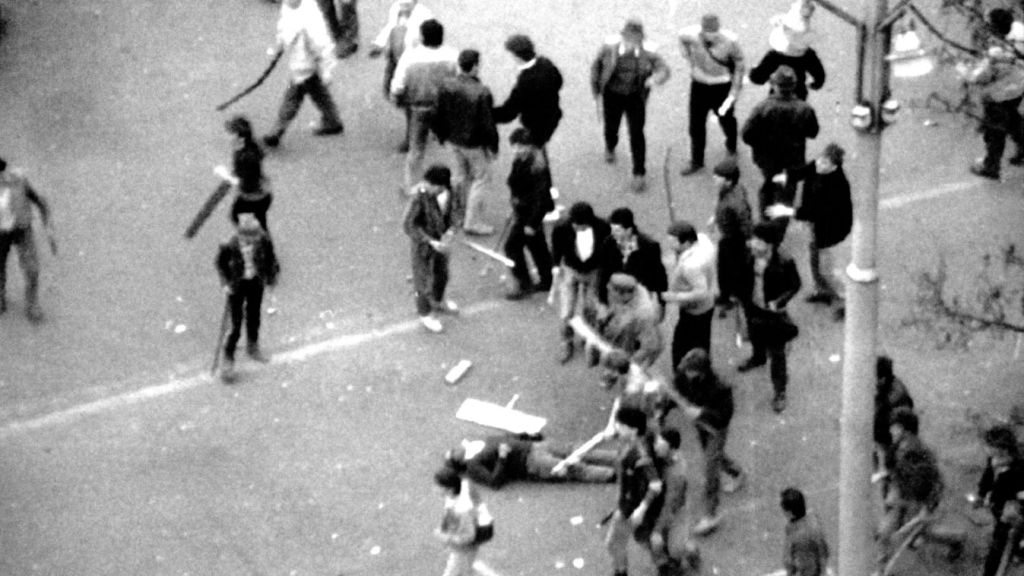
Nyitókép: Görgény-völgyi románok március 20-án magyarokra vadásznak
Fotó: MTI/MTVA
Veczán Zoltán, mandiner
_______________________________
De dragul acurateței istorice… Ro-Hu-En
Când au atacat maghiarii cu drujba: așa aproape că a devenit război civil în Transilvania
Cel mai mare noroc este că nu s-a transformat într-un război civil, spun victimele și martorii pogromului de la Târgu Mureș din 1990, Marșul Negru. Șansa era acolo, foarte mult.
“Au intrat cu mașini în mulțimea care protesta, domnule, au alergat și i-au ucis! N-ați citit ziarul de azi dimineață, Cuvântul Liber?” – așa i-au explicat românii adunați reporterului care îi chestiona într-o înregistrare de acum treizeci și cinci de ani ce făceau pe stradă în acea zi, 20 martie 1990. Chiar și conform anchetei poliției române, vestea era falsă, iar de fapt a fost vorba de un accident provocat de conducerea în stare de ebrietate. Dar aceasta nu a fost prima dezinformare cu care presa șovină a incitat români împotriva maghiarilor și nici ultima.
Marșul Negru, Marosvásárhely – pogromul anti-maghiar (în română și în terminologia care a prins rădăcini peste hotare, este pur și simplu un „conflict interetnic”) a fost pregătit cu grijă. Nici Ion Iliescu, comunistul care s-a transformat brusc în social-democrat, ulterior președinte al României și președinte al Consiliului Frontului Salvării Naționale, nici cercurile serviciilor secrete aflate în proces de transformare, nu au privit favorabil solidaritatea româno-maghiară. Unirea celor două popoare era periculoasă, căci cu doar trei luni mai devreme, plecând de la un protest împotriva evacuarii pastorului reformat László Tőkés, declanșase revoluția, măturând regimul lui Nicolae Ceaușescu.
Târgu Mureș a fost locația ideală pentru a sparge acest lucru. După cum au subliniat Csaba Zoltán Novák, Halmy Kund și mulți alți istorici, cvasi-capitala Țării Secuiești a început să fie românizată târziu și în mod forțat, conducătorii fiind înlocuiți. În anii 1970, maghiarii erau încă o majoritate de două treimi. Un memorandum județean secret din 1985 cerea crearea a 7.600 de locuri de muncă dedicate românilor pentru a obține o „majoritate satisfăcătoare”. Nou-veniții au provocat nenumărate prejudicii comunității maghiare și nu au ezitat să-și demonstreze superioritatea.
Săptămâni de incitare
Optimismul revoluționar a împins toate acestea în plan secund, dar numai pentru o perioadă. Ca răspuns la formarea Alianței Democrate Maghiare în România (RMDSZ) – cu participarea efectivă a foștilor ofițeri de securitate –, la Târgu Mureș s-a înființat și organizația de extremă dreaptă a urii numită Uniunea Vatra Românească, cu sloganul „pentru a proteja românii persecutați în propria lor patrie de hoardele maghiare care infectează omenirea”. Nu foarte diferit de politica minoritară a lui Ceaușescu, Iliescu și cercul său s-au alăturat și ei la incitarea organizației șovine împotriva „maghiarilor separatiști”.
Inteligentsia maghiară a început să se organizeze, iar pe 10 februarie, condusă de András Sütő, a avut loc în centrul orașului Marosvásárhely o demonstrație tăcută la lumina lumânărilor și a ținerii de cărți de sute de mii pentru educația în limba maghiară, iar mulțimile au mărșăluit și în alte orașe locuite de maghiari. „În Sepsiszentgyörgy, unde locuiam la acea vreme, s-a adunat un număr incredibil de oameni într-o manieră ordonată, nu am văzut niciodată o mulțime atât de mare”, își amintește Csíky Csengele, actor din Vásárhely, în ziarul nostru. La vârsta de paisprezece ani, el a trăit direct evenimentele, deoarece mama sa, Éva Balázs, de asemenea actor, lucra ca corespondent local pentru Radio Marosvásárhely, iar printre prietenii lor din Vásárhely se numărau László Tőkés și fratele său, András Tőkés, precum și András Béres, profesor la Universitatea de Artă Dramatică. Csengele Csíky La 15 martie 1990, când László Tőkés a ținut un discurs în fața a douăzeci de mii de oameni pe terenul de fotbal Sepsiszentgyörgy, a vorbit în numele tinerilor – la prima sa apariție publică.
La începutul lunii martie, au existat deja proteste mai mici la școala de medicină pentru drepturile studenților maghiari. Între timp, Vatra făcea mereu presiuni pentru teroarea maghiară și anexarea Transilvaniei și a găsit sprijin în guvern și în instituțiile sale de presă. Cei care sărbătoreau ziua de 15 martie au fost hărțuiți constant de extremiști, unul dintre ei a fost bătut la Szatmárnémeti, iar statuia Petőfi a fost avariată la Erdőd, tot la Szatmár – iar jandarmeria nu a făcut nimic. Au provocat însă o isterie uriașă după ce necunoscuți au mâzgălit inscripția „da-l jos” de pe soclul statuii lui Avram Iancu din Târgu Mureș, care a masacrat mii de maghiari Această inscripție, care dezvăluie o cunoaștere mai puțin decât perfectă a maghiarei, a fost deformată de oameni necunoscuți. Presa a sărit pe acestea, exagerând și adăugându-le, înflamând și mai mult populația românească.
Bomba a explodat a doua zi – probabil cu ajutorul serviciului secret – lângă cartierul Tudor, care era în principal locuința românilor nou stabiliți. Aici, farmacia numărul 28 a fost dotată cu noile indicatoare bilingve standard ale lanțului de farmacii. La aceasta i s-a alăturat un grup de români beți care ieșise dintr-un restaurant vecin, condus de niște oameni care, conform martorilor oculari, nici măcar nu erau de acolo; Au pătruns în farmacie și au agresat-o pe una dintre femeile farmaciști. Au început să vâneze unguri pe stradă, iar polițiștii și militarii ajunși la fața locului nu au făcut nimic. În urma lui Rompres, cotidianul bucureştean Adevărul a scris că farmacistul maghiar nu a vrut să deservească românii – în ciuda faptului că angajaţii maghiari şi români ai farmaciei au protestat în scris împotriva minciunii. Apoi a venit vestea despre presupusul vandalism al statuilor de către maghiari. Mulțimea românească care se întorcea după-amiază bătea deja pe maghiari; Au pătruns într-un bloc de apartamente și au bătut doi reporteri din Népújság. Apoi mulțimea, care s-a umflat la câteva mii, a mărșăluit pe strada principală, revoltând, blestemând pe László Tőkés și pe scriitorul András Sütő și dărâmând semne maghiare. Polițiștii de la fața locului au urmărit acest lucru cu desăvârșire.
RMDSZ a protestat firesc, dar agențiile de stat nu au reacționat. În perioada 17-18 martie, patru sute de tineri au participat la Congresul Tineretului Pano-Maghiar de la Marosvásárhely, unde și-au exprimat solidaritatea cu studenții maghiari ai facultății de medicină și au condamnat în declarația lor dezvăluirea Asociației Vatra din România.
Mențiune de onoare
Adevăratele ciocniri au început pe 19 martie, când țărani înarmați din satele din apropiere populate de români au fost transportați cu autobuzul în oraș.
Előd Kincses, vicepreședintele Frontului Salvării Naționale din județul Mureș și fost apărător al lui László Tőkés, a devenit o țintă, iar aceștia i-au cerut demisia și restricții asupra limbii maghiare. „Le-am spus: nu m-ați ales voi, mă resemnez cu cei care m-au ales”, își amintește Előd Kincses ca răspuns la întrebarea ziarului nostru. A convocat membrii organizației, dar s-au prezentat doar românii, care l-au convins să demisioneze pentru a potoli gloata. Degeaba: mulțimea, înarmată cu topoare și macete, a asediat sediul RMDSZ; Mai multe persoane au fost prinse în clădire, în care s-au baricadat, inclusiv scriitorul András Sütő. Românii au vrut să dea foc clădirii, dar între timp au ajuns polițiștii și militarii sub comanda colonelului Ioan Judea, care a promis protecție maghiarilor dacă aceștia vor ieși. El nu s-a ținut de cuvânt: oamenii săi priveau cu nerăbdare și, potrivit martorilor oculari, a zâmbit în timp ce i-au bătut pe unguri – lui András Sütő i-au fost rupte coastele și a fost orbit într-un ochi.
Secuiul clocotea. Kincses a mers la Székelyudvarhely pentru un proces. Dimineața, în piața principală s-a adunat o mulțime de zece mii, „spunând că vor intra în Vásárhely pentru a-i proteja pe unguri”. Autobuzele erau deja pregătite, „au vrut să vină să lupte pentru noi, mi-a fost greu să-i descurajez”, își amintește avocatul ca răspuns la întrebarea noastră.
În Csíky Csengele, amintirea este vie că „Sepsiszentgyörgy a fost în mișcare în câteva clipe, mii de oameni stăteau deja în autobuz, gata să plece în gară, venind la Vásárhely”. Cu toate acestea, mama lui
László Tőkés și familia lui i-au implorat să nu plece la telefon, pentru că ar duce la război civil.
„Mama a vorbit ținând telefonul departe de ureche, ca să-l auzim”, își amintește el. A fost teribil de greu să oprești mulțimea, dar Éva Balázs și ceilalți intelectuali de frunte au folosit toate mijloacele posibile. „Îmi amintesc de mama, la un moment dat, întinsă la pământ în fața unui autobuz ca să-l oprească, au vrut atât de mult să vină și să ajute.
Între timp, cele două mulțimi se priveau în piața principală din Marosvásárhely; Ungurii au fost mai numeroși, zeci de mii au cerut reintegrarea lui Kincses în funcția de vicepreședinte și o anchetă cu privire la bătaia maghiarilor din ziua precedentă. Kincses s-a întors în oraș și a încercat să calmeze mulțimea în două limbi. Au sosit însă din nou țăranii români învinși aduși cu autobuzul, înarmați cu coase și topoare. Și din nou armata nu a intervenit. Românii au alergat în mod deliberat peste mai mulți unguri, apoi au spart cordonul slab al poliției și i-au împins pe maghiari înapoi la primărie, care inițial s-au apărat cu mâinile goale, apoi au demontat băncile și au ripostat cu scânduri.
Ceea ce nu a făcut armata, au făcut satele maghiare din jur: au instituit o blocada pentru a împiedica mai mulți militanți români să vină la Vásárhely. Armata s-a trezit și de contraatacul reușit, tancurile românești au ajuns în oraș și au stat între cele două mulțimi. Soldații au urmărit cu liniște restul poveștii, de exemplu,
românii încurajați au început să arunce cocktail-uri Molotov în unguri,
și nu au fost deranjați de faptul că un camion românesc a intrat în mulțimea maghiară.
Luptele s-au intensificat, iar entuziasmul ungurilor a scăzut. În cele din urmă, rezultatul bătăliei a fost decis de
Cincizeci de țigani din Marosvásárhely au sosit la opt seara și s-au pus de partea maghiarilor,
Apoi, la unsprezece fără un sfert, secuii din Nyárád și Sovata au sosit cu bâte și furci – de obicei bătrâni, veterani de război. Deci, din moment ce ungurii aveau deja arme, extremiştii români i-au prins în fugă. Secuii i-au dat afară din Grand Hotel, i-au scos din autobuzele lor pe agresorii care fugeau și au dat foc vehiculelor.
Comandă în stil românesc
În zorii zilei, au sosit unități de elită ale armatei române, au scos steagul maghiar din primărie, iar ceea ce au numit ordine a fost restabilit.
Campania de presă și confruntarea juridică a început imediat, mai mulți maghiari și țigani maghiari au fost condamnați la închisoare, Kincses, care împăcase pe toți, a fost căutat pentru instigare la genocid, dar toți românii agresori au scăpat. Mai mult, este tipic ceea ce a evidențiat propaganda românească: bătaia unui țăran din Libanfalva, Mihăilă Cofariu – dar ceea ce a rămas în afara poveștii a fost că bărbatul îi atacase anterior pe maghiari cu drujba. Iliescu însuși l-a vizitat în spital ca victimă a „atrocității antiromânești”.
Marosvásárhely a fost mai târziu și el afectat de diviziune și neîncredere, mulți maghiari plecând după pogrom și nedreptățile suferite. Primarul Zoltán Soós – care a trăit această perioadă ca student în vârstă de 16 ani la Bolyai – subliniază, ca răspuns la întrebarea ziarului nostru, că evenimentele, pe lângă deteriorarea relațiilor dintre cele două comunități, au avut și un impact economic asupra orașului, deoarece investitorii l-au evitat. El adaugă: „din fericire, astăzi nu mai este tabu ca primarul să fie maghiar”, și este important ca oamenii să simtă că guvernul orașului lucrează pentru toată lumea. „Sunt bucuros să spun că după treizeci și cinci de ani s-au calmat încet, toți cei care am trăit asta ne dorim să nu se mai întâmple niciodată, nici în Târgu Mureș, nici în niciun alt oraș din Transilvania. Azi, Târgu Mureșul este caracterizat de un bilingvism normal, dar a devenit acceptat.
Este încă o chestiune de dezbatere ce s-ar fi întâmplat dacă ar fi sosit întăririle din Sepsiszentgyörgy și alți secui. După cum explică Csíky Csengele, mulți nu sunt siguri că a fost corect să oprească mulțimea, dar el crede că în lipsa unui lider, la doar câteva luni după împușcăturile de la Timișoara, aceasta a fost decizia rațională.
Acest lucru confirmă și Kincses Előd ziarului nostru: „Am aflat mai târziu că convoiul de mineri care mai târziu au destrămat protestul studențesc din București era staționat la Székelykocsárd, la cincizeci de kilometri de Vásárhely, s-au organizat și Regátul s-a mobilizat să vină și „apărarea Transylvaniei” de acolo zekelys au terminat cu acele bețe? El adaugă că este mândru că a reușit să prevină această „conspirație teribilă de securitate”.
Imagine de deschidere: Românii din Valea Görgény vânează maghiari pe 20 martie Foto: MTI/MTVA
Zoltán Veczán, mandarină
_________________________________
For the sake of historical fidelity… Ro-Hu-En
When they attacked Hungarians with chainsaws: this is how it almost turned into a civil war in Transylvania
The greatest luck is that it did not turn into a civil war – say the victims and witnesses of the 1990 Marosvásárhely pogrom, the Black March. The chance was there, very much so.
“They ran into the protesting crowd with cars, sir, they ran over and killed them! Didn’t you read this morning’s newspaper, Cuvântul Liber?” – this is how the gathered Romanians explained to the reporter who was questioning them in a recording from thirty-five years ago what they were doing on the street that day, March 20, 1990. Even according to the investigation of the Romanian police, the news was false, it was actually an accident caused by drunk driving. But this was not the first disinformation with which the chauvinist press incited Romanians against Hungarians, and it will not be the last.
Black March, Marosvásárhely – the anti-Hungarian pogrom (in Romanian and abroad, only “interethnic conflict” in the terminology that has taken root) was carefully prepared. Neither the communist Ion Iliescu, who suddenly turned into a social democrat, later president of Romania, chairman of the Council of the National Salvation Front, nor the secret service circles that were in the process of transformation, looked favorably on Romanian-Hungarian solidarity. The union of the two peoples was dangerous, which, barely three months earlier, had sparked a revolution based on a protest against the eviction of the Reformed pastor László Tőkés, sweeping away the regime of Nicolae Ceaușescu.
Marosvásárhely was an ideal location to break this. As Csaba Zoltán Novák, Halmy Kund and many other historians have pointed out, the quasi-capital of Székelyland began to be Romanianized late and in a forced process, replacing the leaders. In the 1970s, Hungarians were still a two-thirds majority. A 1985 county secret list called for the creation of 7,600 jobs dedicated to Romanians to achieve a “comfortable majority.” The newcomers caused countless grievances to the Hungarian community, and they did not hesitate to demonstrate their superiority.
Weeks of incitement
Revolutionary optimism pushed all this into the background, but only for a while. In response to the formation of the Hungarian Democratic Alliance in Romania (RMDSZ), the far-right hate organization called the Romanian Hearth Alliance (Uniunea Vatra Românească) was also established in Târgu Mureș with the slogan “to protect the Romanians persecuted in their own homeland from the Hungarian hordes that infect humanity.” Iliescu and his circle, who did not differ much from Ceaușescu’s minority policy, joined the chauvinist organization’s incitement against “separatist Hungarians.”
The Hungarian intelligentsia began to organize, and on February 10, a silent candlelight and book-holding demonstration of hundreds of thousands led by András Sütő took place in the center of Târgu Mureș for Hungarian-language education, and the masses also marched in other cities inhabited by Hungarians. “In Sepsiszentgyörgy, where I lived at the time, an incredible number of people gathered in a disciplined manner, I had never seen such a large crowd before,” recalls Csíky Csengele, an actor from Vásárhely, to our newspaper. At the age of fourteen, he experienced the events firsthand, as his mother, Éva Balázs, also an actor, worked as a local correspondent for the Marosvásárhely Radio, and among their friends in Vásárhely were László Tőkés and his brother, András Tőkés, as well as András Béres, a professor at the University of Dramatic Arts. On March 15, 1990, when László Tőkés gave a speech in front of twenty thousand people on the Sepsiszentgyörgy football field, Csíky Csengele spoke on behalf of the youth – his first public appearance in his life. At the beginning of March, for example, there were smaller movements for the rights of Hungarian students at the medical school. Meanwhile, Vatra always talked about Hungarian terror and the annexation of Transylvania, and found support in the government and its press. Those celebrating March 15 were constantly harassed by extremists, one of them was beaten in Szatmárnémeti, and the Petőfi statue was damaged in Erdőd, also in Szatmár – and the gendarmerie did nothing. However, they caused a huge hysteria after unknown people scrawled the inscription “le ved” on the base of the statue of Avram Iancu in Targu Mures, who massacred thousands of Hungarians, revealing his not-so-perfect knowledge of Hungarian. The press jumped on these, exaggerating and adding to them, further inflaming the Romanian population.
The next day, the bomb exploded – probably with the help of the secret service – next to the Tudor district, which was mainly home to newly settled Romanians. Here, the pharmacy number 28 had the new standard, bilingual signs of the pharmacy chain. A drunken Romanian group that had emerged from the neighboring restaurant, led by some people who, according to witnesses, were not even from there, got involved; they broke into the pharmacy and assaulted one of the female pharmacists. They started hunting for Hungarians on the street, and the police and soldiers who arrived at the scene did nothing. Following Rompres, the Bucharest daily Adevărul wrote that the Hungarian pharmacist did not want to serve Romanians – in vain the Hungarian and Romanian employees of the pharmacy protested against the lie in writing. Then came the news of the alleged vandalism of statues by Hungarians. The Romanian crowd returning in the afternoon was already beating Hungarians; They broke into a block of flats and beat two reporters from Népújság. Then the crowd, which had swelled to several thousand, marched down the main street, ransacking the main street, insulting László Tőkés and the writer András Sütő, and tearing down Hungarian signs. The police officers on the scene also watched this indifferently.
The RMDSZ naturally protested, but the state agencies did not react. On March 17–18, four hundred young people participated in the all-Hungarian youth congress in Marosvásárhely, where they pledged solidarity with the Hungarian students of the medical school and condemned the rampage of the Romanian Hearth Association in their statement.
Honorable Mention
The real clashes began on March 19, when armed peasants, who had been recruited from the surrounding Romanian-populated villages, were bussed into the city.
Kincses Előd, the vice-president of the National Salvation Front in Mureş County and former defense lawyer of László Tőkés, became a target, demanding his resignation and restrictions on the Hungarian language. “I told them: you did not elect me, I resign for those who “elected” – recalls Előd Kincses in response to our newspaper’s question. He called together the members of the organization, but only the Romanians showed up, who convinced him to resign in order to calm the mob. In vain: the crowd, armed with axes and machetes, besieged the RMDSZ headquarters; several people were trapped in the building, they barricaded themselves, including the writer András Sütő. The Romanians wanted to set the building on fire, but in the meantime the police and the military arrived under the command of Colonel Ioan Judea, who promised protection to the Hungarians if they came out. He did not keep his word: his men stood idly by, and he, according to eyewitnesses, smiled as they beat the Hungarians – András Sütő’s ribs were broken, and he was blinded in one eye.
Székelyföld was in turmoil. Kincses went to Székelyudvarhely for a trial. In the morning a crowd of tens of thousands gathered in the main square, “saying they were going to Vásárhely to protect the Hungarians”. The buses were already being prepared, “they wanted to come and fight for us, I had great difficulty dissuading them” – the lawyer recalls in response to our question.
Csíky Csengele vividly remembers that “Sepsiszentgyörgy moved within moments, several thousand people were already sitting on the bus, ready to leave at the train station, saying they were coming to Vásárhely”. However, his mother,
László Tőkés and his family begged him not to leave on the phone, because it would lead to a civil war.
“My mother spoke in such a way that she held the receiver away from her ear so that we could hear her too” – he recalls. It was terribly difficult to stop the crowd, but Éva Balázs and the other leading intellectuals used every means at their disposal. “I remember my mother lying down on the ground in front of a bus to stop it; they wanted to come and help so much. Finally, seeing the determination, people slowly gave up their plan.”
Meanwhile, in the main square of Marosvásárhely, the two crowds were staring at each other; the Hungarians were more numerous, tens of thousands demanding that Kincses be reinstated as vice president and that the Hungarian beating of the previous day be investigated. Kincses returned to the city and, in two languages, tried to calm the crowd. However, the Romanian peasants brought by bus arrived again, armed with scythes and axes. And the army again did not intervene. The Romanians deliberately ran over several Hungarians, then broke through the weak police cordon and beat the Hungarians back to the mayor’s office, who initially defended themselves with their bare hands, then dismantled the benches and beat them back with boards.
What the army did not do, the surrounding Hungarian villages did: they set up a blockade so that no more Romanian militants could come to Vásárhely. The army also woke up to the successful counterattack, Romanian tanks arrived in the city and stood between the two crowds. The soldiers watched idly as the Romanians, emboldened by the incident, began to throw Molotov cocktails at the Hungarians,
and they were not bothered by the fact that a Romanian truck drove into the Hungarian crowd.
The fighting intensified, the enthusiasm of the Hungarians waned. In the end, the outcome of the battle was decided by the fact that
at eight in the evening, fifty gypsies from Targu Mures arrived and sided with the Hungarians,
then at three-quarters of an hour, the Szeklers from Nyárád and Sovata arrived with sticks and pitchforks – typically elderly, war veterans. So, since the Hungarians already had weapons, the Romanian extremists caught them fleeing. The Szeklers kicked them out of the Grand Hotel, took the fleeing aggressors out of their buses, and set the vehicles on fire.
Establishing order the Romanian way
At dawn, the elite units of the Romanian army arrived, took down the hung Hungarian flag from the city hall, and what they called order was restored.
The press campaign and legal showdown immediately began, several Hungarians and Hungarian Gypsies were sentenced to prison, Kincses, who had reconciled everyone, was wanted for inciting genocide, but all the aggressor Romanians escaped. What is more, it is characteristic that Romanian propaganda highlighted what happened: the beating of a peasant from Libanfalva, Mihăilă Cofariu – only the fact that the man had previously attacked the Hungarians with a chainsaw was left out of the story. Iliescu himself visited him in the hospital as a victim of the “anti-Romanian atrocity”. Marosvásárhely was later also affected by division and distrust, many Hungarians moved away after the pogrom and the injustices they suffered. Mayor Zoltán Soós – who lived through this period as a 16-year-old student at Bolyai – points out in response to our newspaper’s question that the events, in addition to the deterioration of relations between the two communities, also had an economic impact on the city, because investors avoided it. He adds: “fortunately, it is no longer taboo today for the mayor to be Hungarian,” and it is important for people to feel that the city government works for everyone. “I can happily say that after thirty-five years, sentiments have slowly calmed down. All of us who have experienced this want it to never happen again, neither in Marosvásárhely nor in any other Transylvanian city. Today, Marosvásárhely is characterized by normal bilingualism. Not everyone is happy about this, but it has now become accepted.”
What would have happened if the reinforcements from Sepsiszentgyörgy and other Székelys had arrived is still a matter of debate. As Csíky Csengele explains, many are not sure that it was right to stop the crowd, but he believes that it was the rational decision, in the absence of a leader, just a few months after the volleys of fire in Timisoara. Kincses Előd confirms this to our newspaper: “Later I learned that the convoy of miners who later broke up the student demonstration in Bucharest was stationed in Székelykocsárd, fifty kilometers from Vásárhely. The Mócs organized themselves, and the Regát also moved to come and “protect” Transylvania from the Hungarians. Not to mention that the Romanian army was there, what would the Székelys have done with those sticks?” He adds that he is proud that he was able to prevent this “terrible security conspiracy”.
Opening image: Romanians from Görgény-völgy hunt Hungarians on March 20th Photo: MTI/MTVA
Zoltán Veczán, mandiner
 Egy őrült naplója